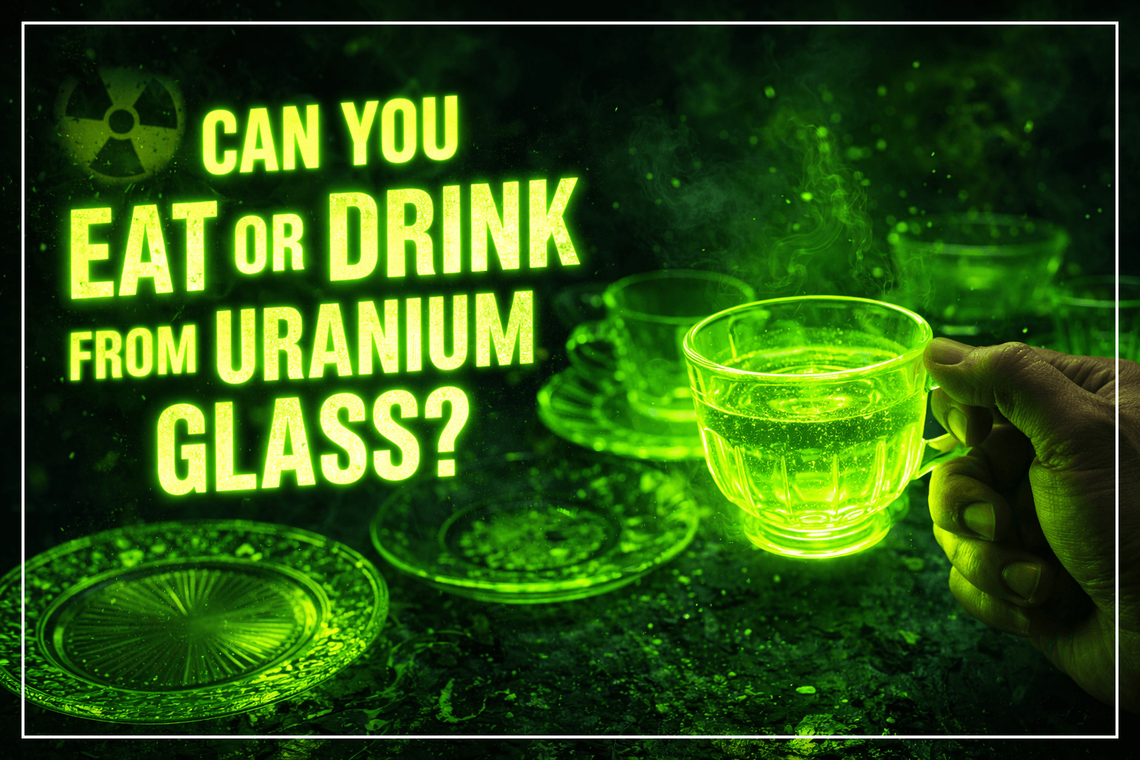
Can You Drink or Eat From Uranium Glass? And What Happens If You Do?
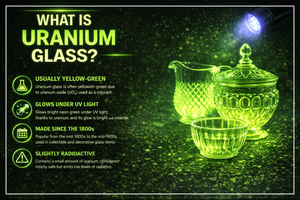
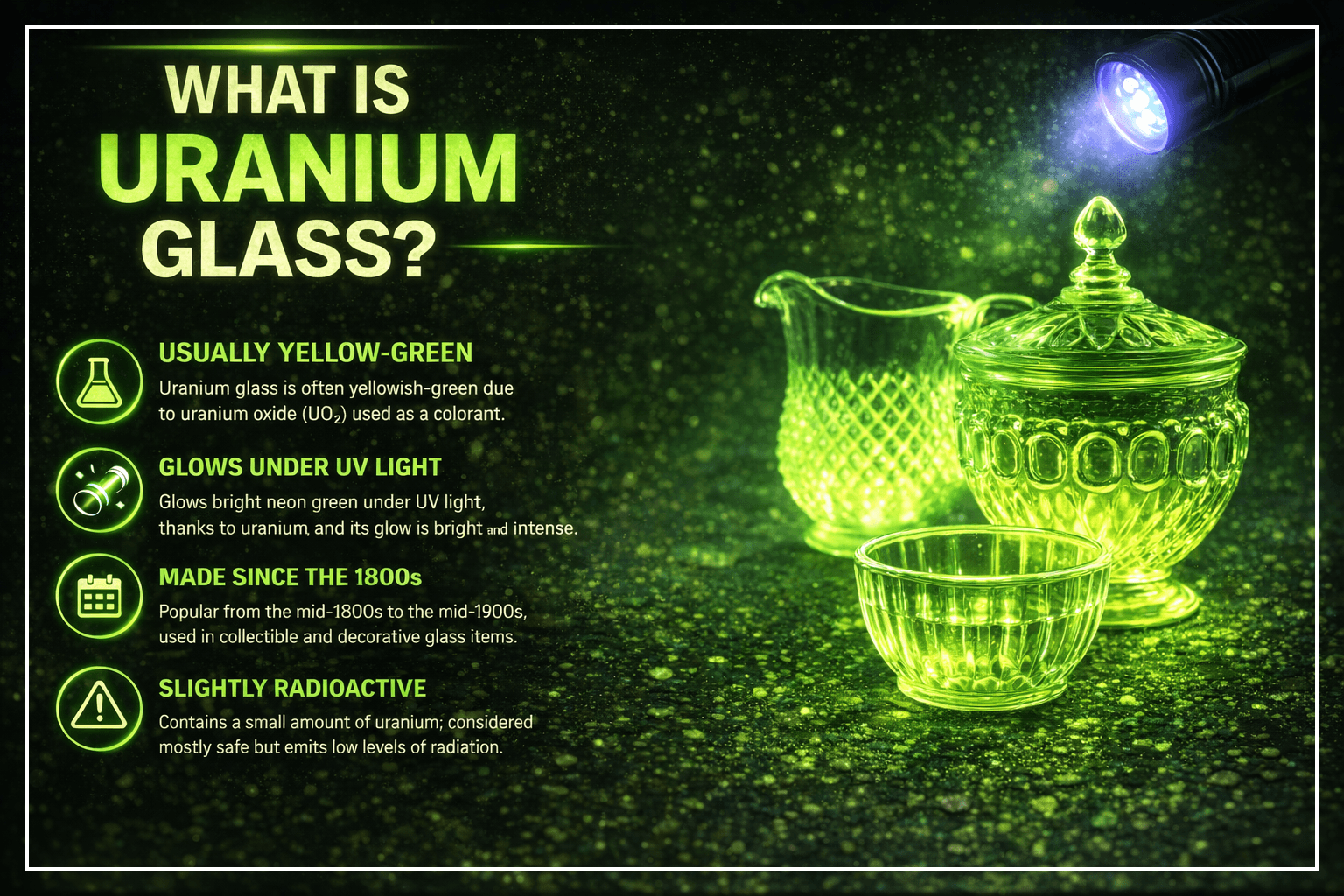
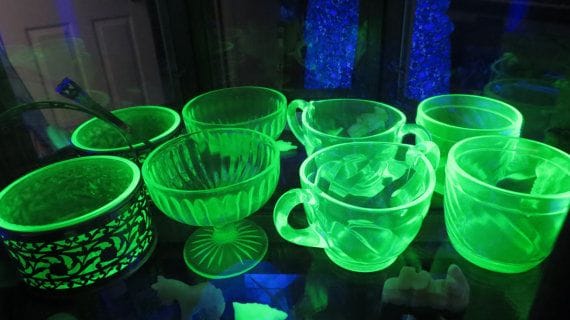
If you are a fan of the neon-green glow of uranium glass (often called Vaseline glass), you’ve probably faced a dilemma: a beautiful vintage tumbler, drink glass is sitting in your hand, and you’re wondering if a single sip of water will "poison" you.
At www.uraniumglassglow.com, we believe in balancing the thrill of the hunt with scientific truth. Is it "instant death" to eat from uranium glass? No. Is it a smart idea for your long-term health? Also no. To understand the real danger, we have to look past the "glow" and look into toxicology and chemistry.
Exactly How Dangerous Is It? (The 1–10 Risk Scale)
To put the danger into perspective, we categorize the risk of uranium glass based on how you interact with it:
- Displaying it in a cabinet: 1/10 (Negligible risk; roughly the same as background radiation).
- Handling it with your hands: 1.5/10 (Very low; alpha particles don't penetrate skin).
- Eating/Drinking from it once: 3/10 (Low immediate risk, but scientifically discouraged).
- Using it daily for acidic foods: 6/10 (High risk of chronic heavy metal poisoning).
The danger isn't about "exploding" or getting radiation burns. The danger is invisible, cumulative, and chemical.
What Actually Happens If You Drink from Uranium Glass?
If you pour a drink into a radioactive glass vessel, your body encounters two distinct threats: Radiological and Chemical.

1. The Chemical Threat: Heavy Metal Poisoning
Most people fear the "radiation," but the chemical toxicity of uranium is actually more dangerous than its radioactivity at these levels. Uranium is a heavy metal, similar to lead or mercury. When it enters your bloodstream, your body doesn't know how to process it. Its primary target is the kidneys (nephrotoxicity).
- The Process: Acidic liquids (juice, wine, soda) act as a solvent. They strip uranium ions from the glass surface in a process called ion exchange leaching.
- The Result: You ingest microscopic amounts of uranium. Over time, this can lead to kidney stress, decreased renal function, or in extreme chronic cases, kidney failure.
2. The Radiological Threat: Internal Alpha Particles
Uranium glass emits alpha particles. Outside your body, these are harmless because they can't even get through a sheet of paper or your dead layer of skin. However, if you swallow a micro-chip of glass or drink leached uranium, that source is now inside your soft tissues.
- Inside the body, alpha particles are like tiny cannons firing at your DNA. Because they are now in direct contact with your stomach lining or kidneys, they can cause localized cellular damage, which statistically increases the long-term risk of cancer.
The "Hidden Killers": Lead and Arsenic
When we talk about Depression-era glass (1920s–1940s), we aren't just talking about uranium. Back then, there were no "FDA Approved" stickers. To make the glass clear, sparkly, or colorful, manufacturers frequently added:
- Lead: Found in almost all "elegant" uranium glass. Lead is a neurotoxin that accumulates in your bones and brain.
- Arsenic: Often used as a de-foaming agent in the glass melt.
When you drink from a uranium glass cup, you aren't just drinking "uranium juice"—you are potentially drinking a heavy metal cocktail of uranium, lead, and arsenic.
What Variables Make it More Dangerous?
If you are determined to use your glass for a special occasion, you must understand what accelerates the danger:
- Acidity (The #1 Enemy): Never put wine, orange juice, tomatoes, or vinegar in uranium glass. The lower the pH, the faster the uranium and lead leach out.
- Heat: Hot coffee or tea increases the molecular energy of the glass, making it much easier for toxic ions to break free into your drink.
- Time: Leaving a drink in a uranium pitcher overnight is significantly more dangerous than a 30-second "toast."
- Condition: "Flea bites" (tiny chips) or cracks expose the raw, un-fire-polished interior of the glass, which sheds radioactive particles much faster than a smooth surface.
Professional Safety Recommendations
At www.uraniumglassglow.com, we follow the ALARA principle: As Low As Reasonably Achievable.
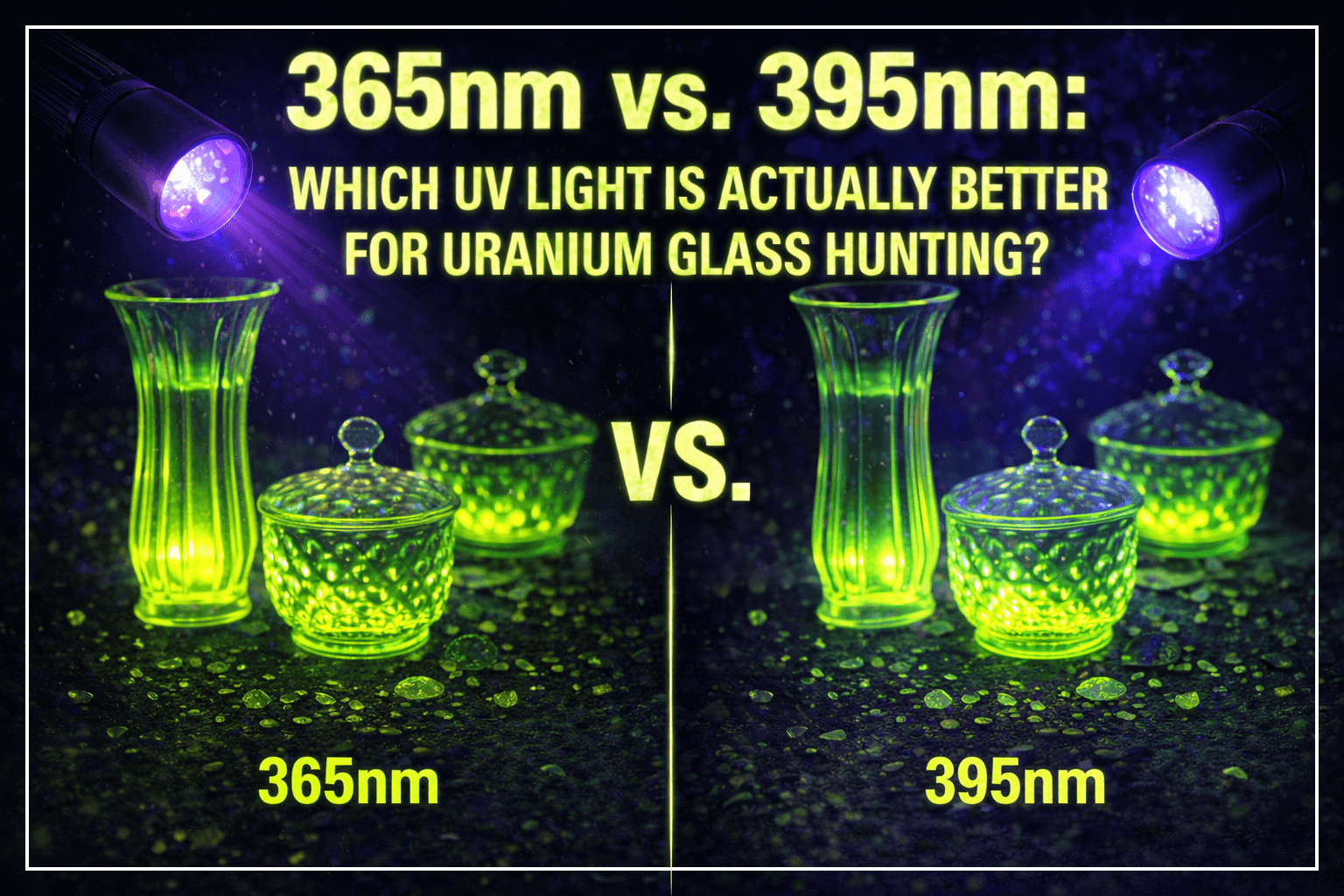
- Display, Don't Consume: The safest way to enjoy the beauty of these pieces is under a 395nm UV light inside a glass case.
- Wash with Care: If you handle your glass, wash your hands afterward. Never use a dishwasher, as it etches the glass and makes it more "leaky" for the next time it's handled.
- Education over Fear: You don't need to throw your collection away. You just need to treat it like what it is: A beautiful, radioactive scientific artifact.
Is it Safe to Eat Food From Uranium Glass Plates and Bowls?
While most discussions focus on drinking, using uranium glass plates, bowls, or serving dishes introduces a unique set of risks that differ from glassware. If you are considering serving a meal on your glowing Vaseline glass collection, you need to understand the mechanics of surface abrasion and food chemistry.

The Cutlery Problem: Scratches and Micro-Shedding
The single biggest danger of eating from uranium glass—as opposed to just drinking—is the use of metal cutlery.
- Surface Damage: When you use a stainless steel knife or fork on a vintage uranium glass plate, you create microscopic scratches in the glass matrix.
- Particle Ingestion: These scratches don't just damage the beauty of the antique; they physically dislodge microscopic flakes of radioactive glass. If these particles hitch a ride on your steak or potatoes, you are directly ingesting alpha-emitting isotopes.
- Increased Leaching: Scratches significantly increase the surface area of the glass. The more "raw" glass is exposed (rather than the smooth, fire-polished original surface), the faster the uranium and lead can leach into your food.
The Acidic Food Trap
Just like with drinks, the pH of your food plays a massive role in safety. Many common dinner items are surprisingly acidic and act as a solvent on radioactive dinnerware:
- Pasta Sauce: Tomatoes are highly acidic and can "pull" heavy metals out of the plate during a 20-minute meal.
- Salad Dressings: Vinegars and lemon-based dressings are aggressive leachers.
- Fruits: Serving sliced apples, oranges, or berries on uranium glass is a high-risk activity for chemical leaching.
What Happens if You Ingest Glass Particles?
If you eat food that has been "contaminated" by a scratched uranium plate, the uranium enters your digestive tract.
- Bioaccumulation: Your body absorbs a small percentage of the uranium into the bloodstream, where it heads straight for the kidneys (nephrotoxicity).
- Internal Irradiation: Any microscopic glass flakes that don't pass through your system immediately sit against the lining of your stomach or intestines. There, they emit Alpha radiation directly into your cells. This is the most dangerous form of exposure because there is no skin barrier to protect your DNA.
Safety Guide: Food vs. Uranium Glass
| Food Item | Risk Level | Why? |
|---|---|---|
| Hot Pasta with Tomato Sauce | CRITICAL | Heat + high acidity + cutlery scraping = maximum leaching and particle shedding. |
| Salad with Vinaigrette | HIGH | Acidic vinegar strips uranium and lead from the glass surface. |
| Steak / Meat | HIGH | Heavy use of knives creates micro-chips and scratches in the radioactive matrix. |
| Dry Crackers / Bread | LOW | No liquid to facilitate leaching and no sharp cutlery required. |
Conclusion
Will one sip of water from a uranium glass tumbler kill you? No. Will it make you sick tomorrow? Unlikely. But is it worth the risk of heavy metal accumulation in your kidneys and internal alpha radiation exposure? Absolutely not.
Keep the glow in your display cabinet and your food on modern, lead-free ceramic.