How Radioactive is Uranium Glass? Is it Risky to Handle?
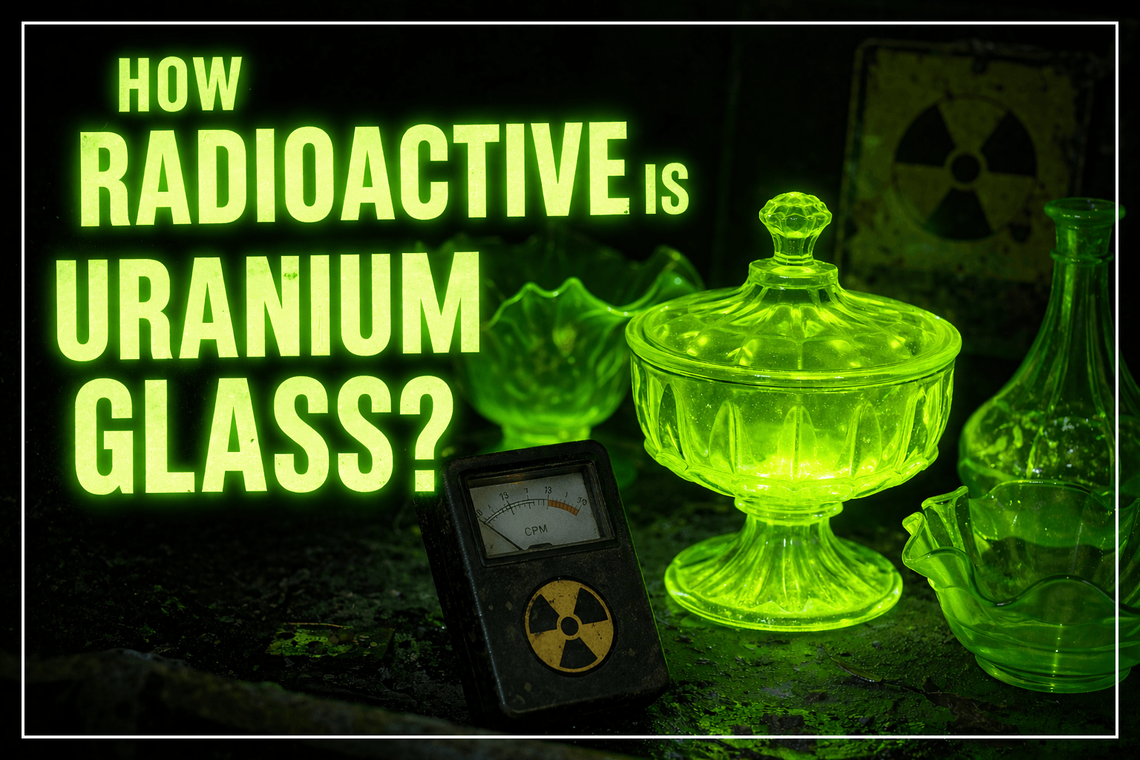
Uranium glass (or Vaseline glass) is genuinely radioactive, containing roughly 1–2% uranium oxide. On a radiation risk scale of 1–10, it ranks between 1.5 and 2.5, meaning it is safe to handle and display for collectors.
What Exactly is Uranium Glass?
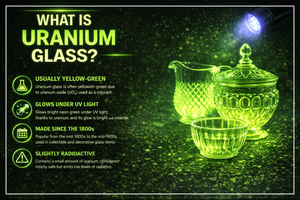
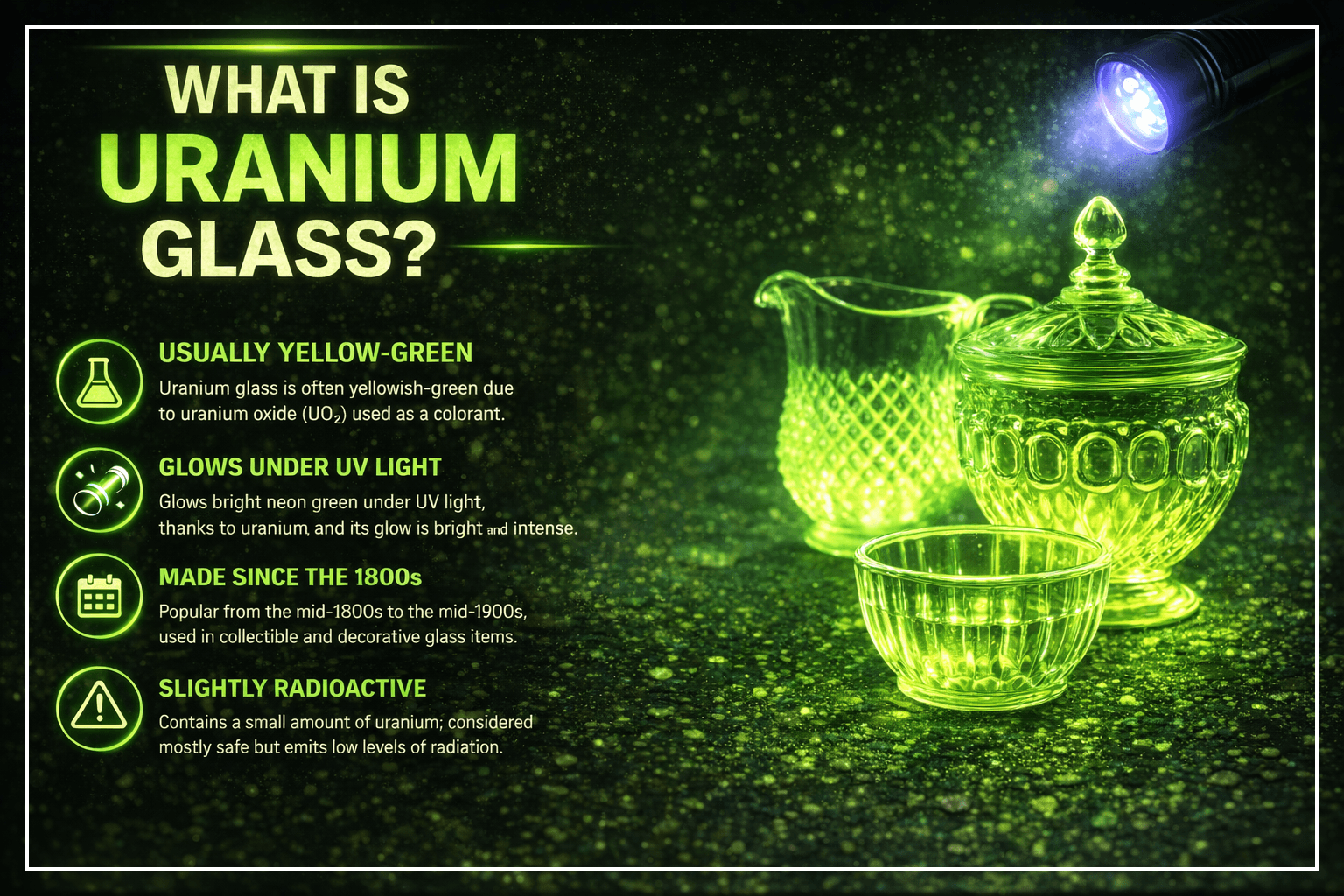
Uranium glass (often referred to interchangeably with Vaseline glass or Depression glass, depending on the era and color) is glass that has had uranium added to a glass melt before melting for coloration.
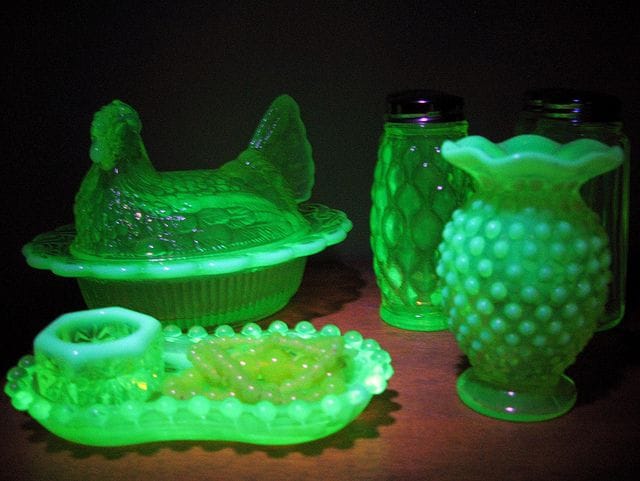
Historically, glassmakers added uranium oxide (or sodium diuranate) to create stunning, translucent shades of yellow and green. This practice began in the mid-19th century and peaked between the 1880s and 1920s. Standard pieces typically contain about 1% to 2% uranium by weight, although some rare early 19th-century pieces can contain up to 25%.
The Misconception: Glow vs. Radiation
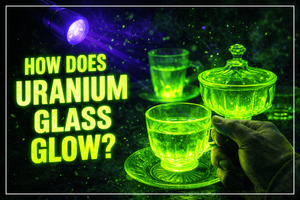
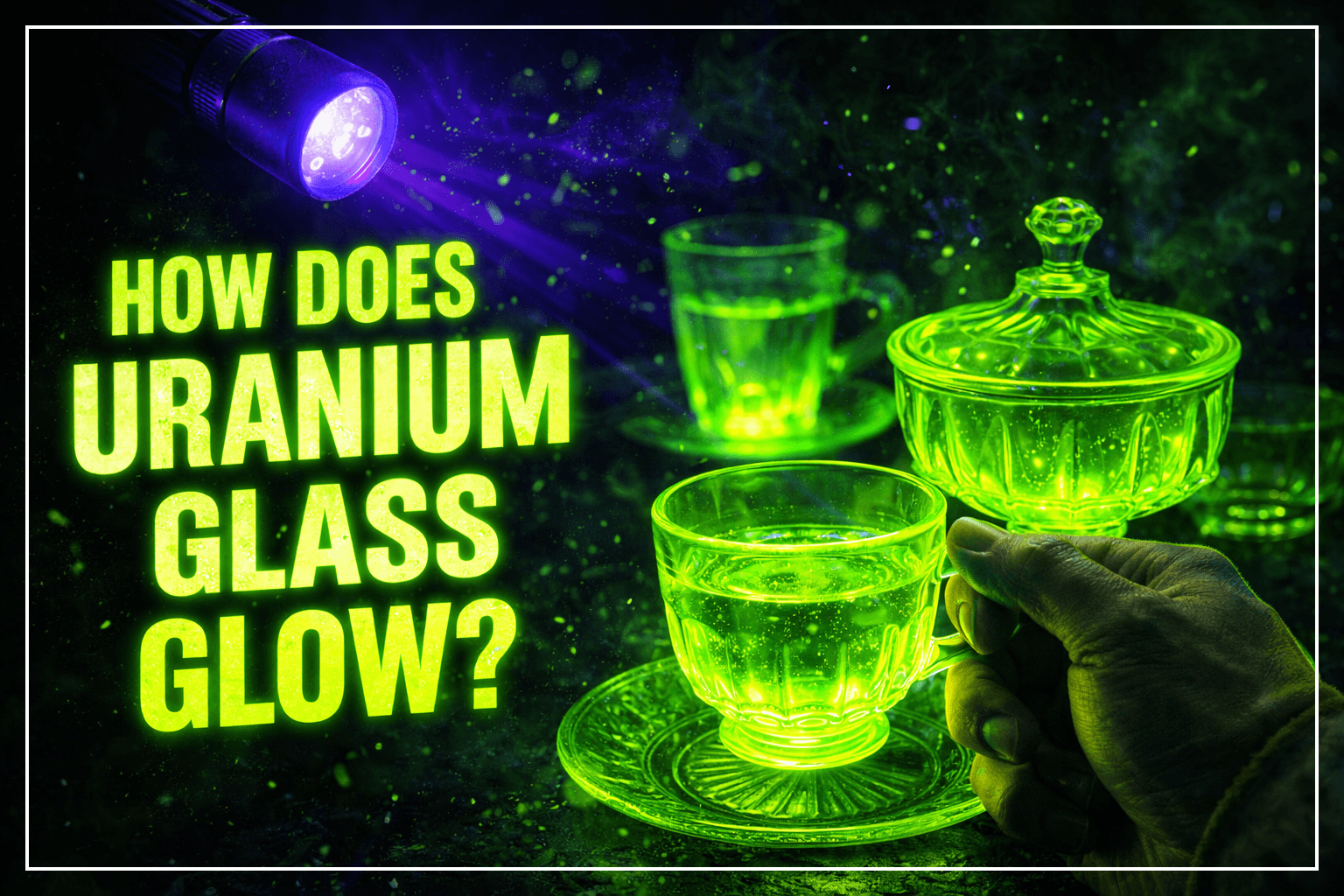
It is crucial to separate the glow from the radiation. When you shine a UV blacklight (typically 365nm or 395nm) on uranium glass, it glows a brilliant neon green. This glow is not radiation. It is a chemical property called fluorescence. The UV light excites the electrons in the uranyl compounds, and as they settle back to their normal state, they release visible light. A piece glowing brightly does not necessarily mean it is highly radioactive.
How Radioactive is it? The Numbers and the Science
Uranium is a naturally occurring radioactive element. Over time, it decays into other elements, releasing ionizing radiation in the process. Uranium glass primarily emits two types of radiation:
- Alpha Particles: These make up the vast majority of the radiation emitted by uranium. Alpha particles are relatively large and heavy. They carry a lot of energy, but they have virtually no penetrating power. They cannot penetrate a piece of paper, and they cannot penetrate the dead layer of skin on your hands.
- Beta Particles: These are smaller and faster than alpha particles and can penetrate slightly further, but they are generally stopped by the glass matrix itself or by a few feet of air.
- Gamma Rays: Uranium glass emits an extremely low, almost negligible amount of gamma radiation.
What Does a Geiger Counter Say?
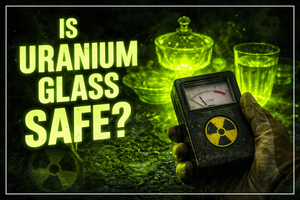
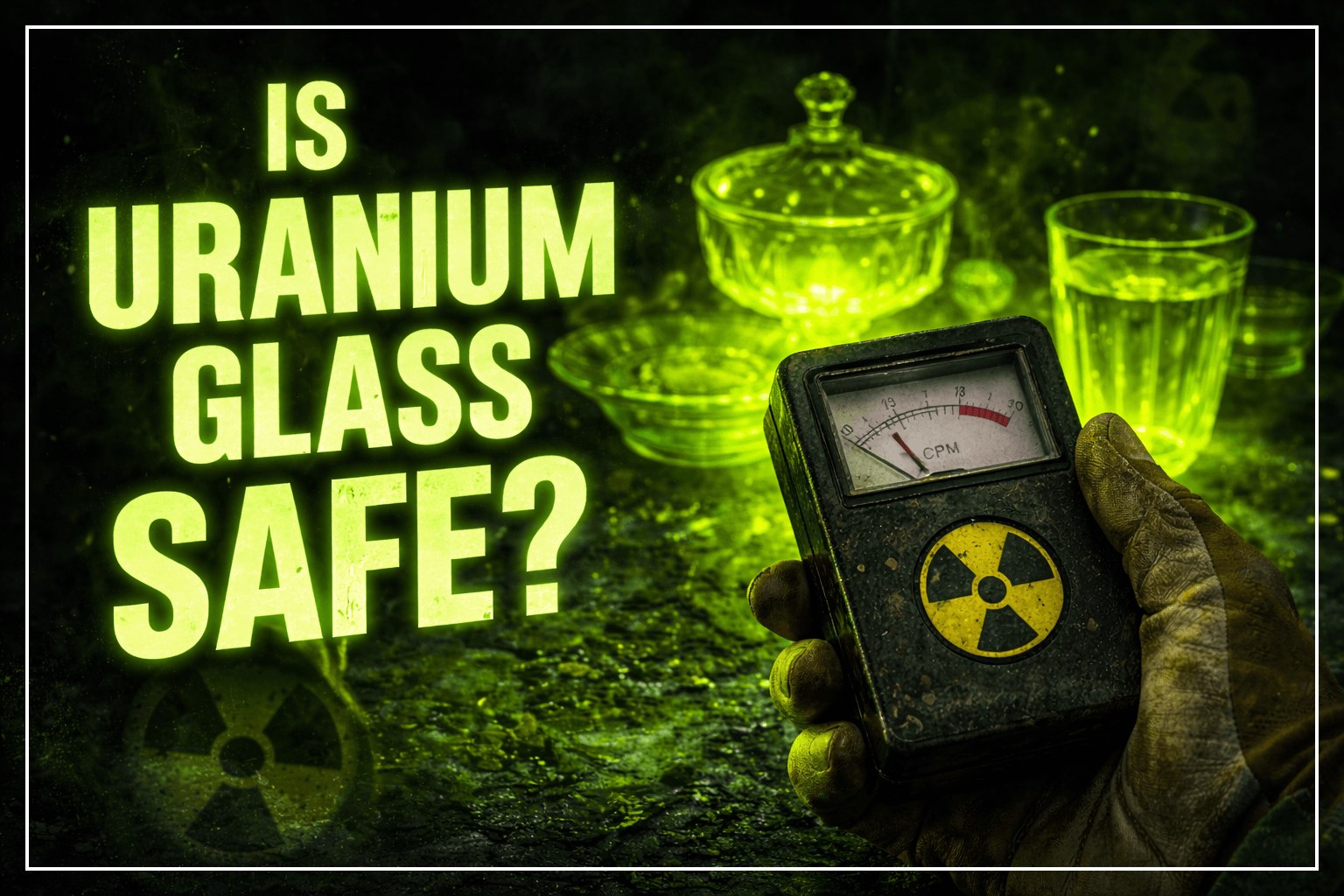
If you place a standard Geiger-Müller counter (equipped with a pancake probe that can detect alpha and beta particles) directly against a piece of uranium glass, you will get a reading.
- Background Radiation: Normal environmental radiation is usually around 30 to 60 CPM (Counts Per Minute), depending on your geographic location.
- Surface Reading of Uranium Glass: Directly against the glass, readings typically range from 100 CPM to a few thousand CPM.
- Distance is Your Friend: Because of the inverse-square law of physics, radiation drops off dramatically with distance. Move the Geiger counter just two or three inches away from the glass, and the reading will typically drop right back down to normal environmental background levels.
The Radioactivity Scale: Where Does It Sit? (1–10)
To understand the risk of uranium glass, let's look at an intuitive scale from 1 to 10, where 1 represents negligible background radiation and 10 represents a high-level hazard (like the interior of a nuclear reactor core).
Most collectible pieces of uranium glass fall between:
1.5 to 2.5 on the Scale
This means that while the radioactivity is measurable with a Geiger counter, the actual dose delivered to a collector displaying these items is extremely low. It is higher than a piece of regular glass, but far lower than many other common radiation sources.
The "Banana" Comparison: Putting Radiation into Context 🍌
In health physics, there is an informal measurement called the BED (Banana Equivalent Dose). Bananas are naturally radioactive because they contain Potassium-40. Comparing uranium glass to a banana helps put "scary" numbers into perspective:
- Eating one banana (1 BED): Gives you a dose of approximately 0.1 microsieverts (µSv).
- Sitting near a uranium glass cabinet (per hour): You receive a dose roughly equivalent to eating 1 to 2 bananas.
- Holding a piece of uranium glass (per hour): Depending on the uranium content, this might be equivalent to eating 5 to 10 bananas.

The Reality Check: To put this in even broader terms, a single cross-country flight exposes you to roughly 400 to 1,000 bananas worth of radiation due to cosmic rays at high altitudes. You would have to spend thousands of hours hugging your uranium glass collection to equal the radiation dose of one vacation flight.
Is Uranium Glass Safe to Use and Collect?
The consensus among health physicists and radiation safety organizations is that collecting and displaying uranium glass is safe. The radiation emitted is minimal and does not pose a hazard when the items are sitting on a shelf or in a display cabinet.
However, there are practical safety guidelines you should follow regarding usage and handling:
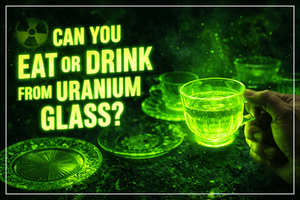
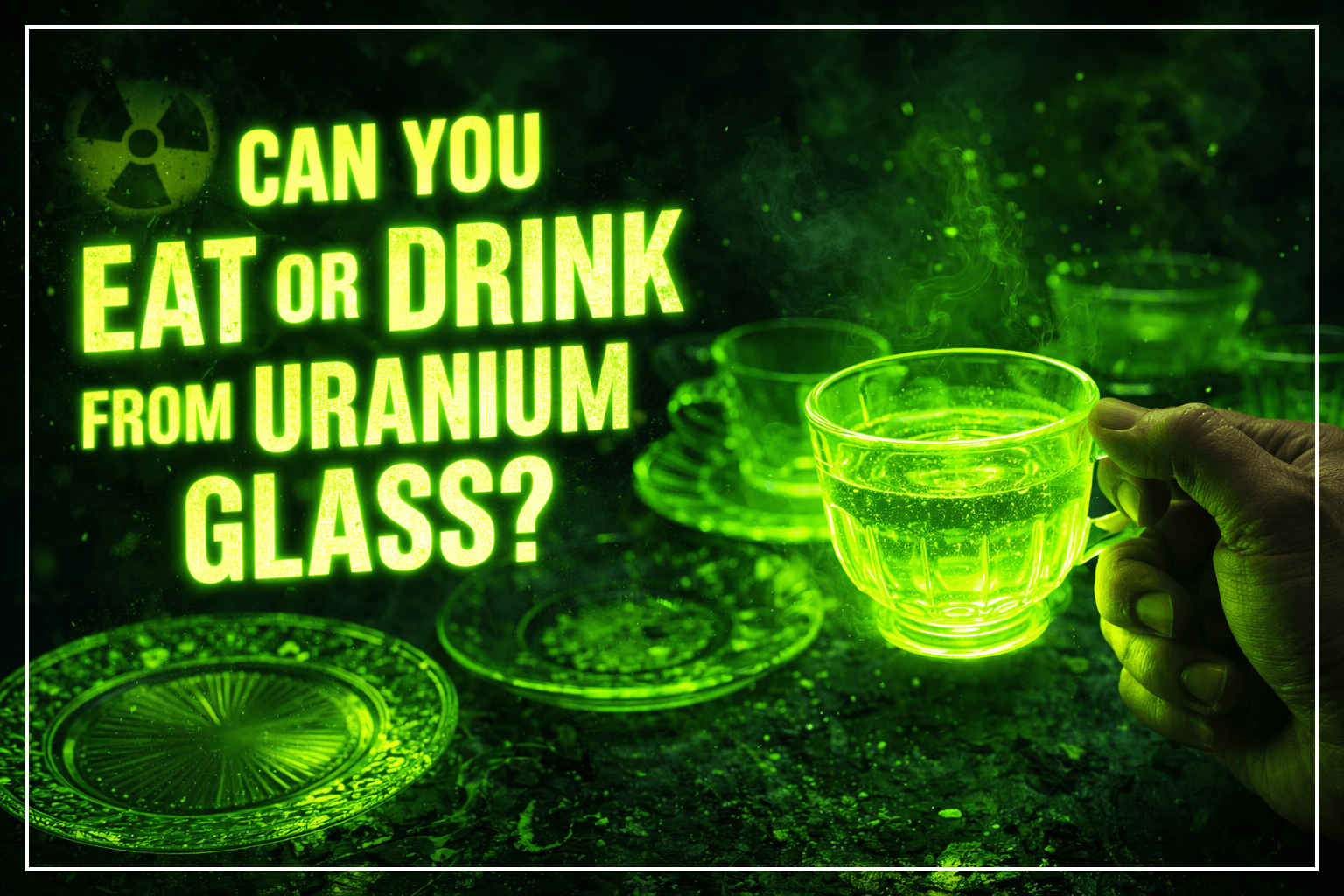
- Do Not Eat or Drink from It Regularly: While drinking a glass of water from a uranium glass tumbler once won't harm you, making a habit of it is strongly discouraged. The primary danger of alpha-emitting materials is internal exposure (ingestion or inhalation).
- Avoid Acidic Foods: This is the most critical rule. Acidic substances like citrus, vinegar, tomatoes, and alcohol can slowly leach heavy metals out of the glass. Ingesting leached uranium (and lead, which is also commonly found in antique glass) over a long period poses a chemical toxicity risk to your kidneys, alongside the internal radiation risk.
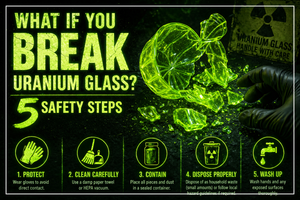
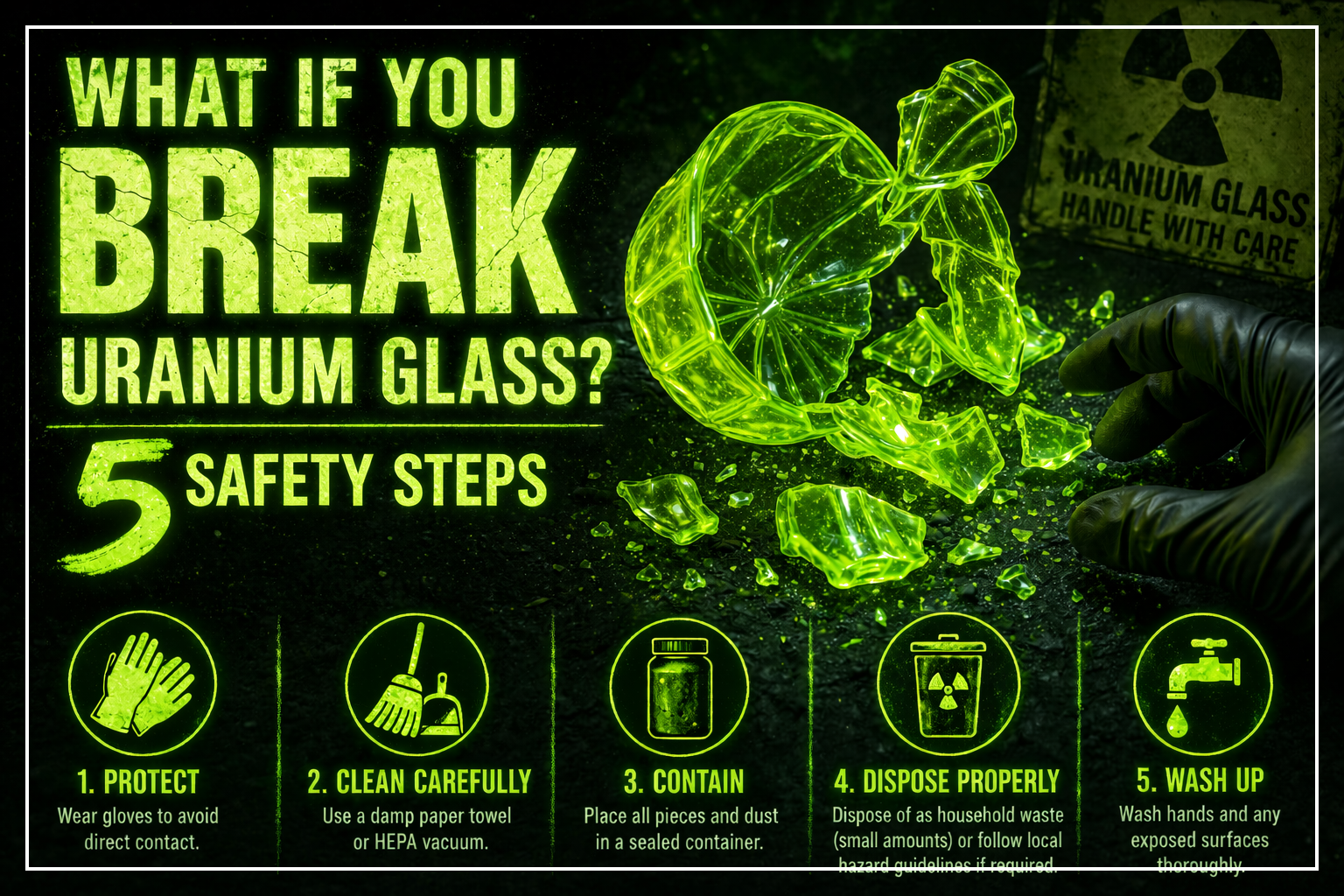
- Do Not Grind or Sand the Glass: If a piece breaks, clean it up carefully with a damp paper towel to avoid creating glass dust. Inhaling microscopic particles of uranium glass traps the alpha-emitters directly inside your lungs, which is highly dangerous.

How to Identify Uranium Glass
If you are hunting for these fascinating atomic-era relics, you need two basic tools:
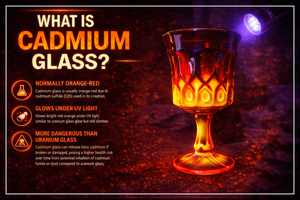
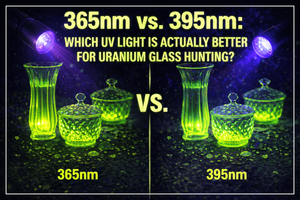
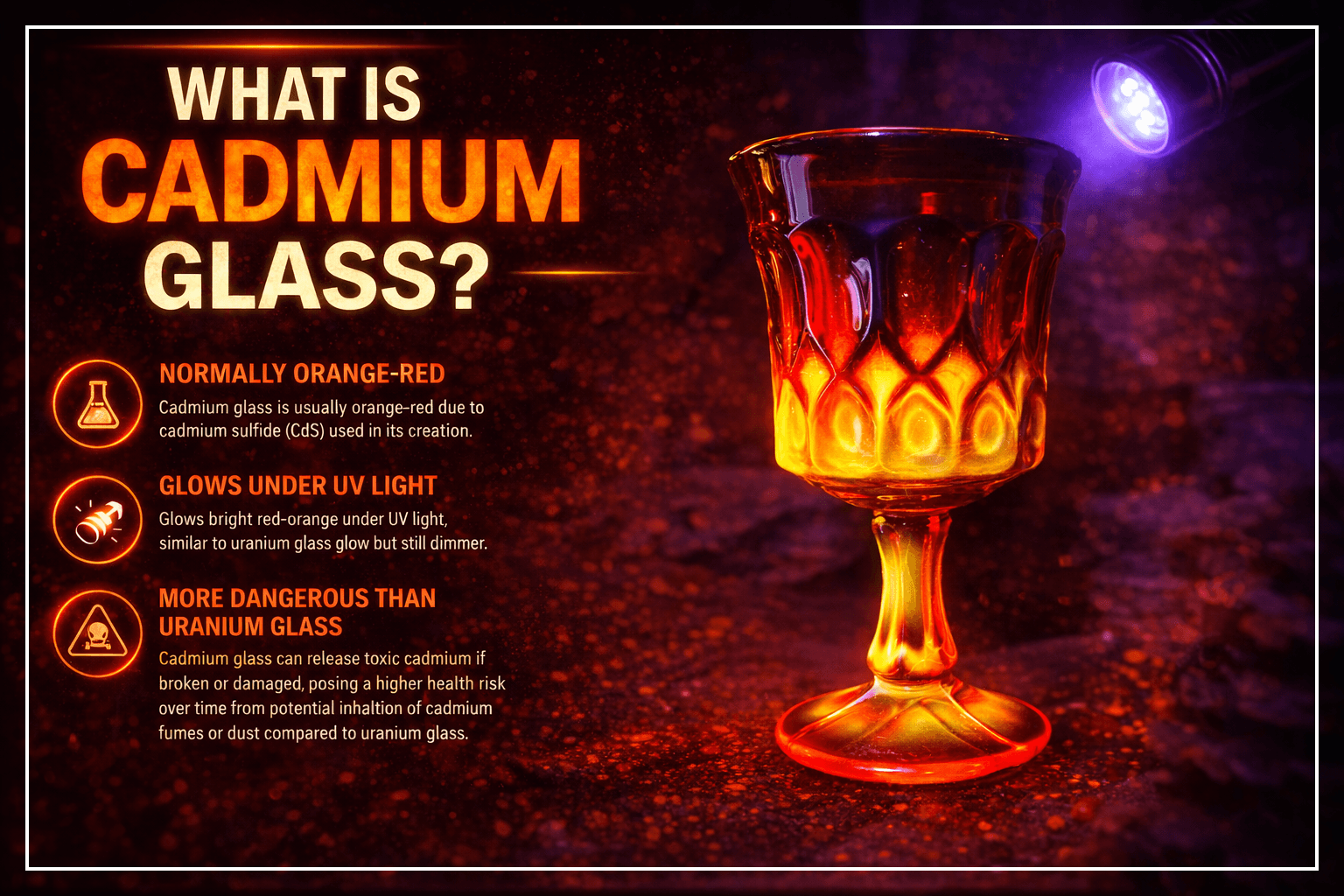
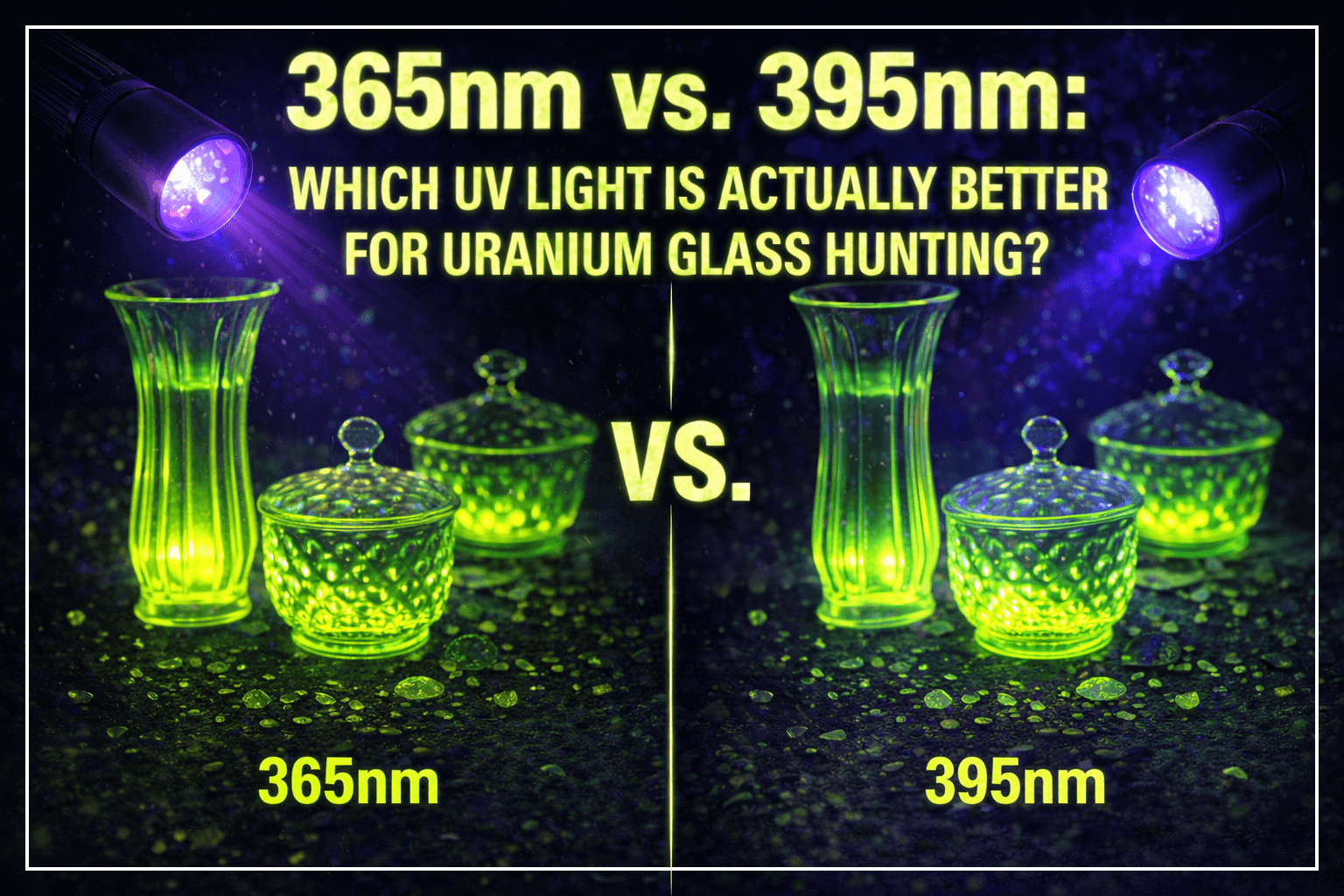
- A UV Flashlight: A 395nm or 365nm ultraviolet flashlight is the standard tool for collectors. Uranium will fluoresce a distinct, unmistakable neon green. (Note: Manganese glass also glows under 365nm, but usually a much paler, yellower-green).
- A Geiger Counter: To definitively prove the presence of uranium and rule out other fluorescent elements, a Geiger counter that detects alpha and beta particles will confirm radioactivity.