Why Does Uranium Glass Glow Green In The Dark? UV Fluorescence
The neon-green radiance of uranium glass is one of the most mesmerizing sights in the world of antiques. But as a master glass cutter, I often see people mistaking this glow for "pure radioactivity." The truth is far more interesting. It is a perfect marriage of 19th-century chemistry and subatomic physics.
In this guide, we will break down exactly how much uranium is hidden in your glass, why it reacts so violently to 395nm UV light, and how this "atomic" recipe first came to be.
The Recipe: How Much Uranium is Inside?
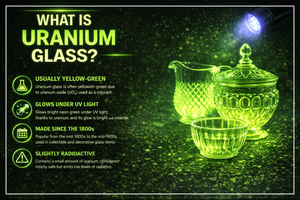
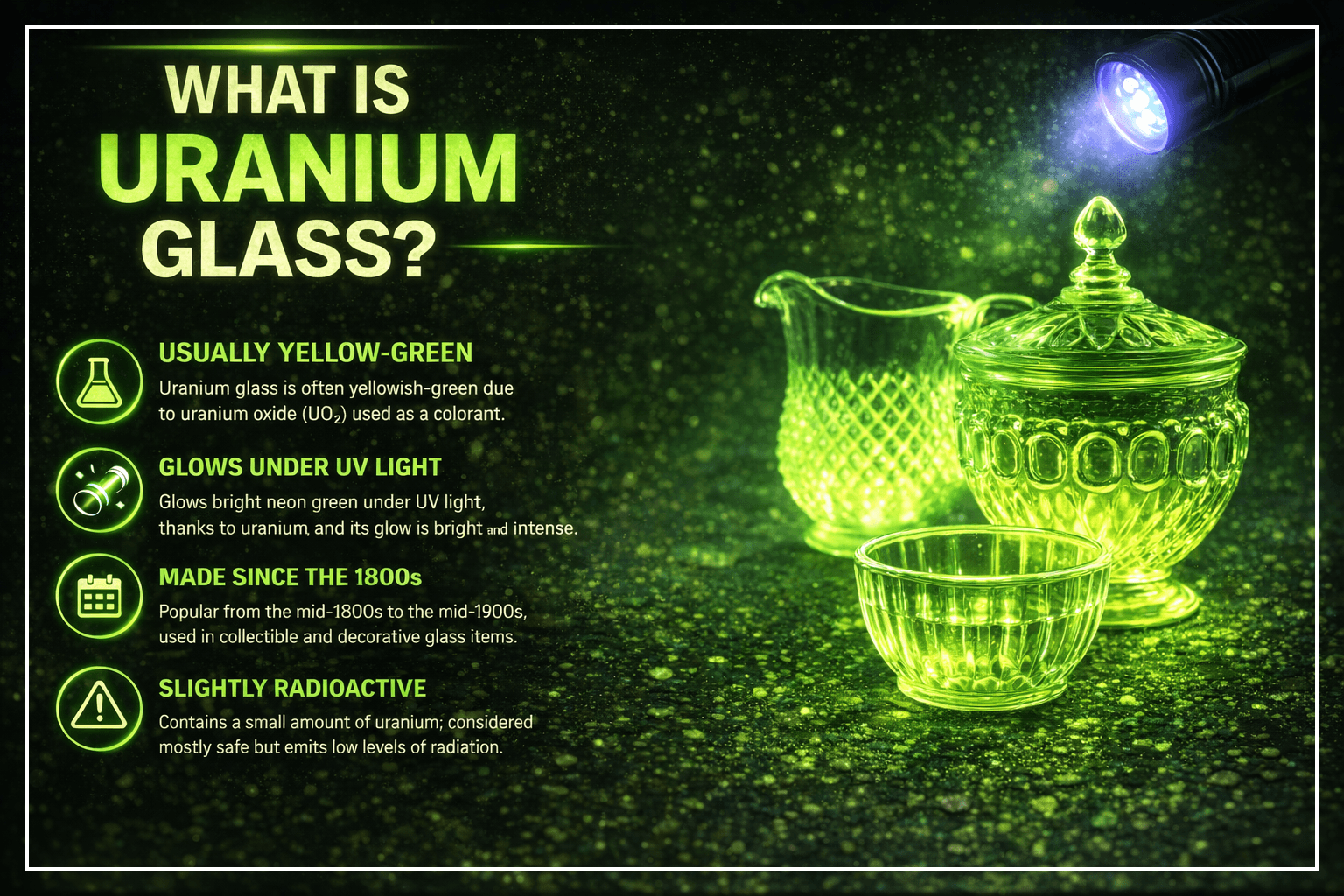
A common misconception is that uranium glass is made of solid uranium. In reality, uranium is used only as a colorant, much like cobalt is used for blue glass or gold for cranberry glass.
The Standard Mix
In most "Depression-era" pieces (1920s–1940s), the concentration of uranium oxide (U3O8) is remarkably low—typically between 0.1% and 2% by weight.

The Outliers
There are rare "heavy" pieces, particularly from the early 19th century or specific Burmese glass, where the concentration can reach up to 25%. However, for the vast majority of items found in antique shops today, you are looking at a very diluted mixture. This tiny amount is enough to saturate the glass with enough ions to trigger a massive visual reaction.
The Birth of the Glow: A Brief History
Uranium glass wasn't an "Atomic Age" invention; it predates the nuclear bomb by over a century.
- The Discovery: While uranium was identified as an element in 1789, it wasn't until the 1830s that Josef Riedel, a legendary glassmaker in Bohemia (now the Czech Republic), perfected the recipe.
- Annagelb & Annagrün: Riedel named his first yellow and green colors "Annagelb" and "Annagrün" after his wife. These were the world's first commercially successful uranium glasses.
- The Golden Era: By the mid-1800s, major factories like Whitefriars in the UK and later Fenton and Mosser in the USA began mass-producing it. It was cheap, beautiful, and looked vibrant even in low candlelight due to its natural fluorescence.
Why Does It Glow? The Physics of Fluorescence
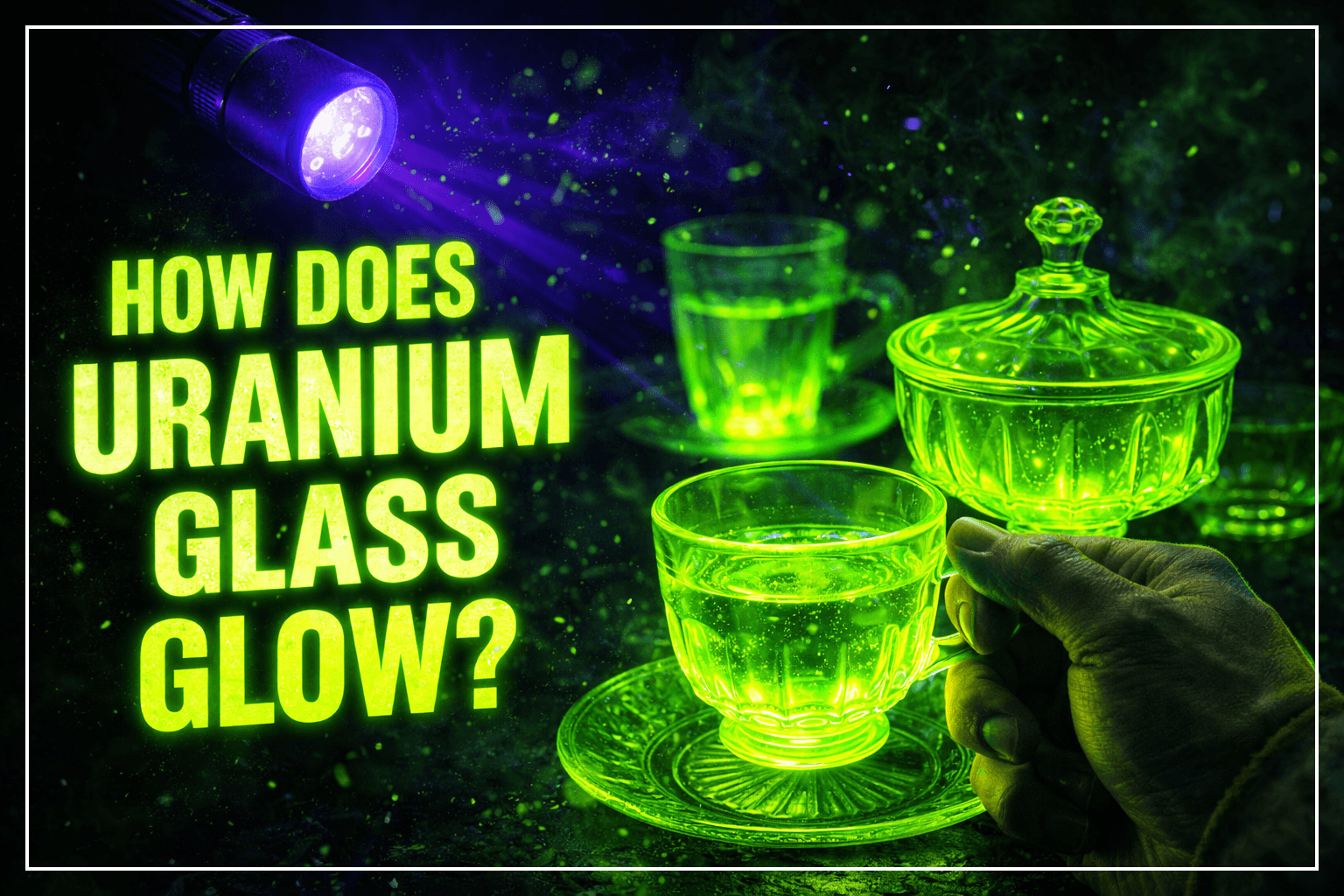
The most important thing to learn is this: Uranium glass does not glow because of radioactivity. If you put a piece of uranium glass in a lead box with no light, it will stay dark. The glow is a process called Fluorescence, and here is how it works at a molecular level:
- Photon Absorption: When you shine a 365nm UV torch on the glass, you are hitting it with invisible high-energy photons.
- Electron Excitation: These photons strike the electrons in the uranium dioxide molecules. The electrons absorb this energy and "jump" to a higher, excited energy shell.
- The Return to Stability: Electrons hate being in an excited state. Almost instantly, they fall back down to their original "ground state."
- Energy Release: To get rid of that extra energy they absorbed, they emit a new photon. Because some energy was lost in the process, the light comes out at a longer wavelength—which happens to be the exact shade of vibrant neon green we see.
Why 395nm UV is the Gold Standard
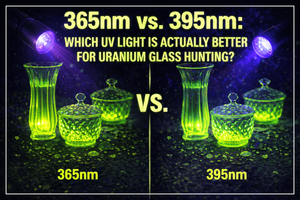
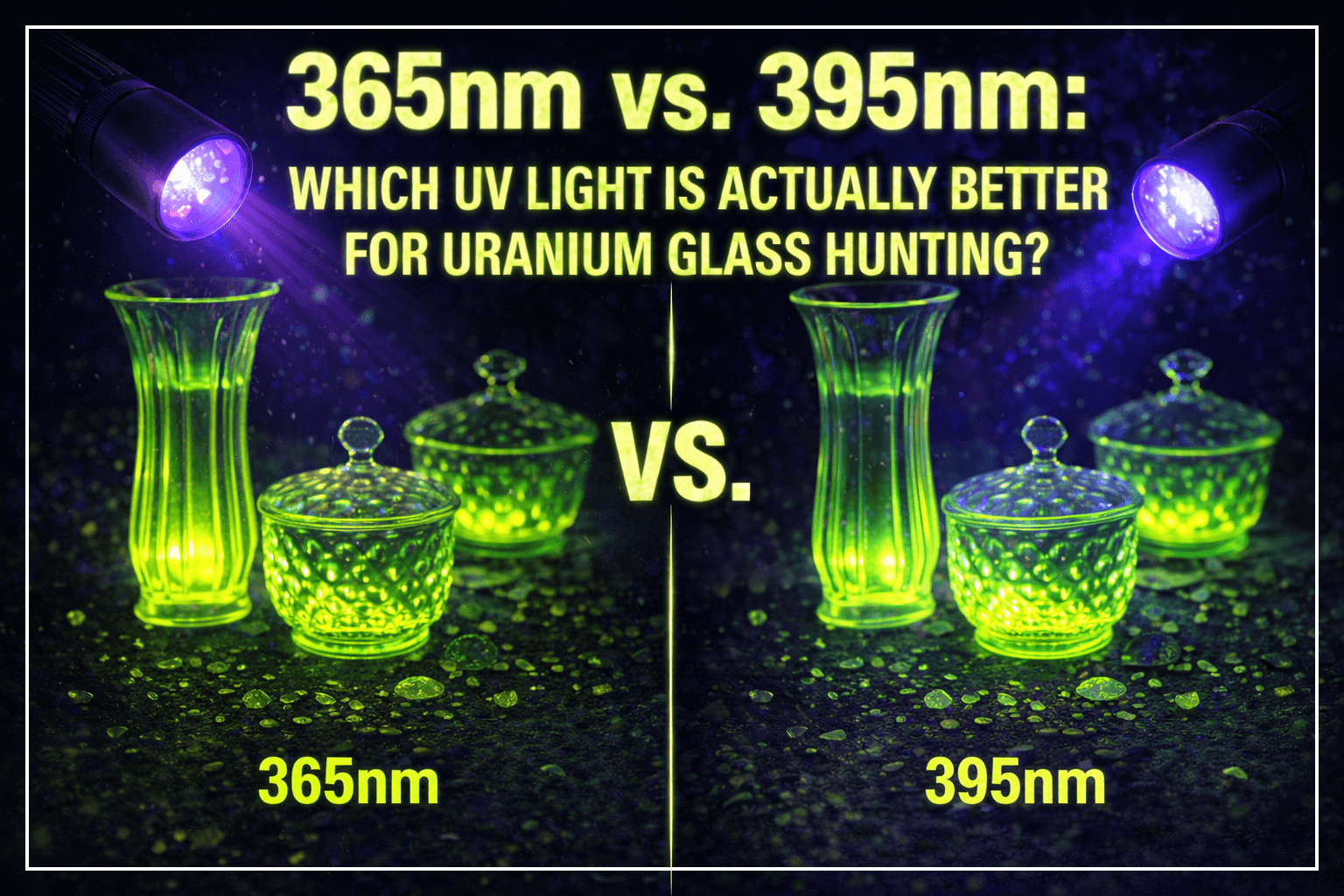
If you use a standard 365nm light, you often see a duller glow mixed with a lot of purple light. This is because those wavelengths are closer to the visible spectrum.
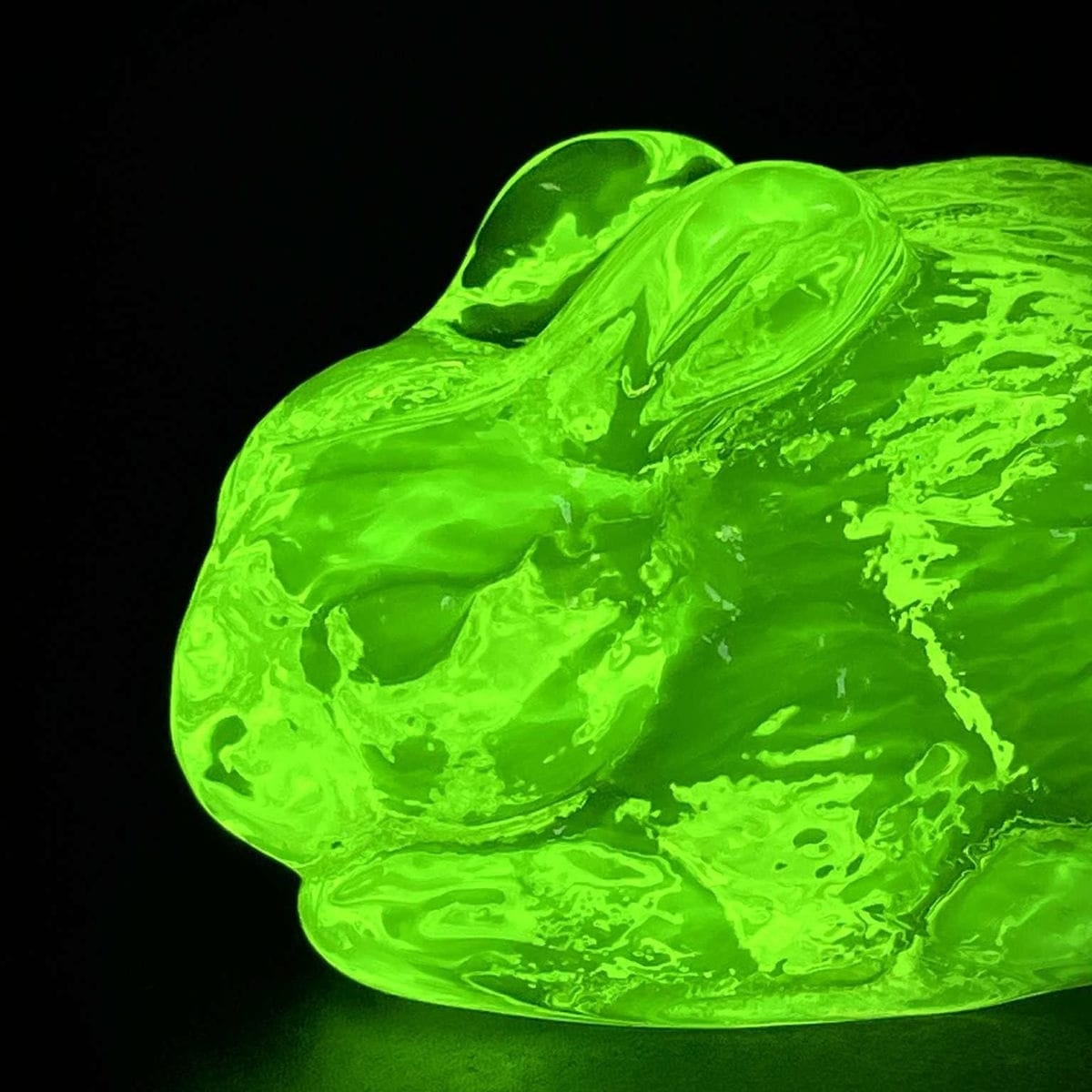
A filtered 395nm UV light is "purer." It provides the exact frequency needed to excite uranium electrons without drowning the piece in purple visible light. As an expert, I always use 395nm to verify the purity of the uranium oxide in the glass before I begin cutting or polishing. It is the only way to see the true "inner fire" of the material.
Summary for Collectors
- The Glow: Is a photochemical reaction (Fluorescence), not radioactive decay.
- The Amount: Usually only 1-2% uranium oxide.
- The History: Born in Bohemia in the 1830s, long before the nuclear age.
- The Tool: Always use a 395nm UV torch for the best and most accurate identification.
Understanding the science doesn't take away the magic—it adds a layer of appreciation for these glowing relics of history. Whether it's a faceted ring or a vintage plate, you are holding a piece of science you can see.
How to Use a UV Flashlight: The Collector’s Masterclass
As a master glass cutter, I see many collectors struggle because they don't know how to properly "interrogate" a piece of glass. Using a UV torch is more than just pointing and clicking; it’s about precision.
1. Choose the 395nm "Filtered" Standard
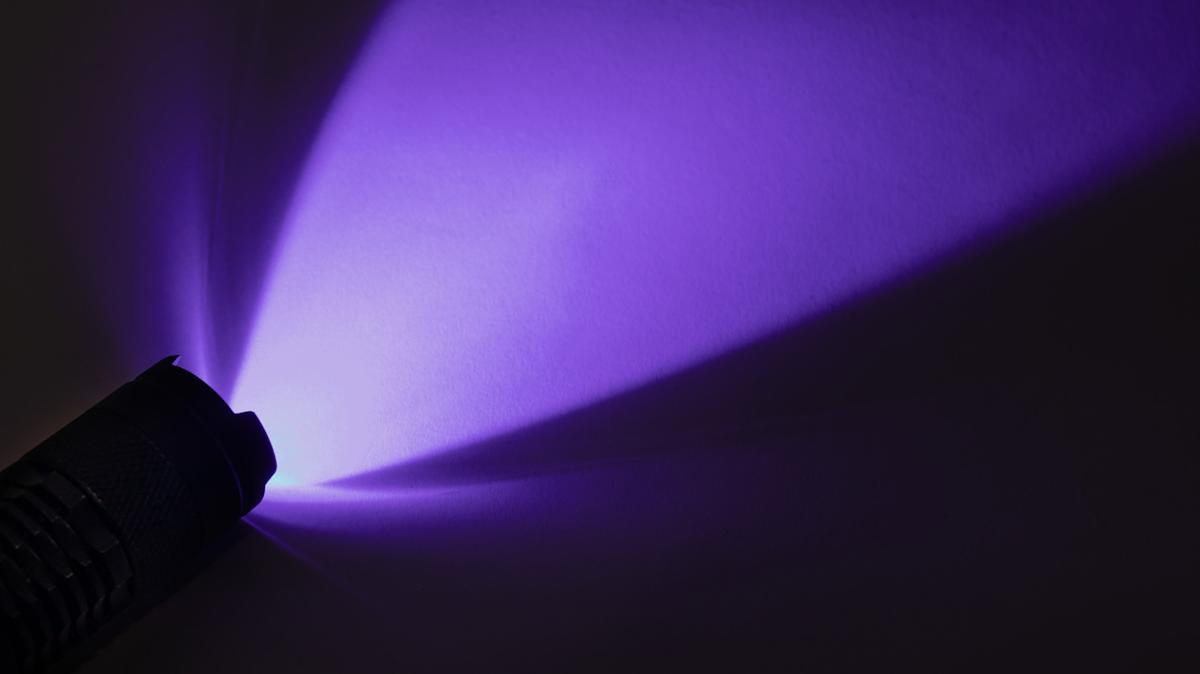
First, ensure your light is a true 395nm filtered UV torch. Standard 395nm lights emit too much visible purple light, which creates a "haze" that masks the internal fire of the uranium. 395nm light is invisible to the human eye, so when the glass starts to glow, you know you are seeing pure fluorescence, not just reflected purple light.
2. The "Dark Room" Technique
While uranium glass glows in daylight, the best way to inspect high-end pieces or faceted jewelry is in low light.
- Shadowing: If you are in an antique shop, use your hand or body to create a shadow over the piece.
- Distance: Start from about 2 feet away and slowly bring the light closer. Authentic uranium glass will "catch" the light even from a distance.
3. Look for the "Inner Fire"
When using your flashlight, look into the glass, not just at the surface.
- Uranium Glass: Glows uniformly from within the entire body of the glass. It looks like the glass itself is the light source.
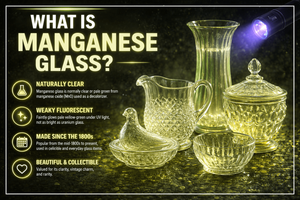
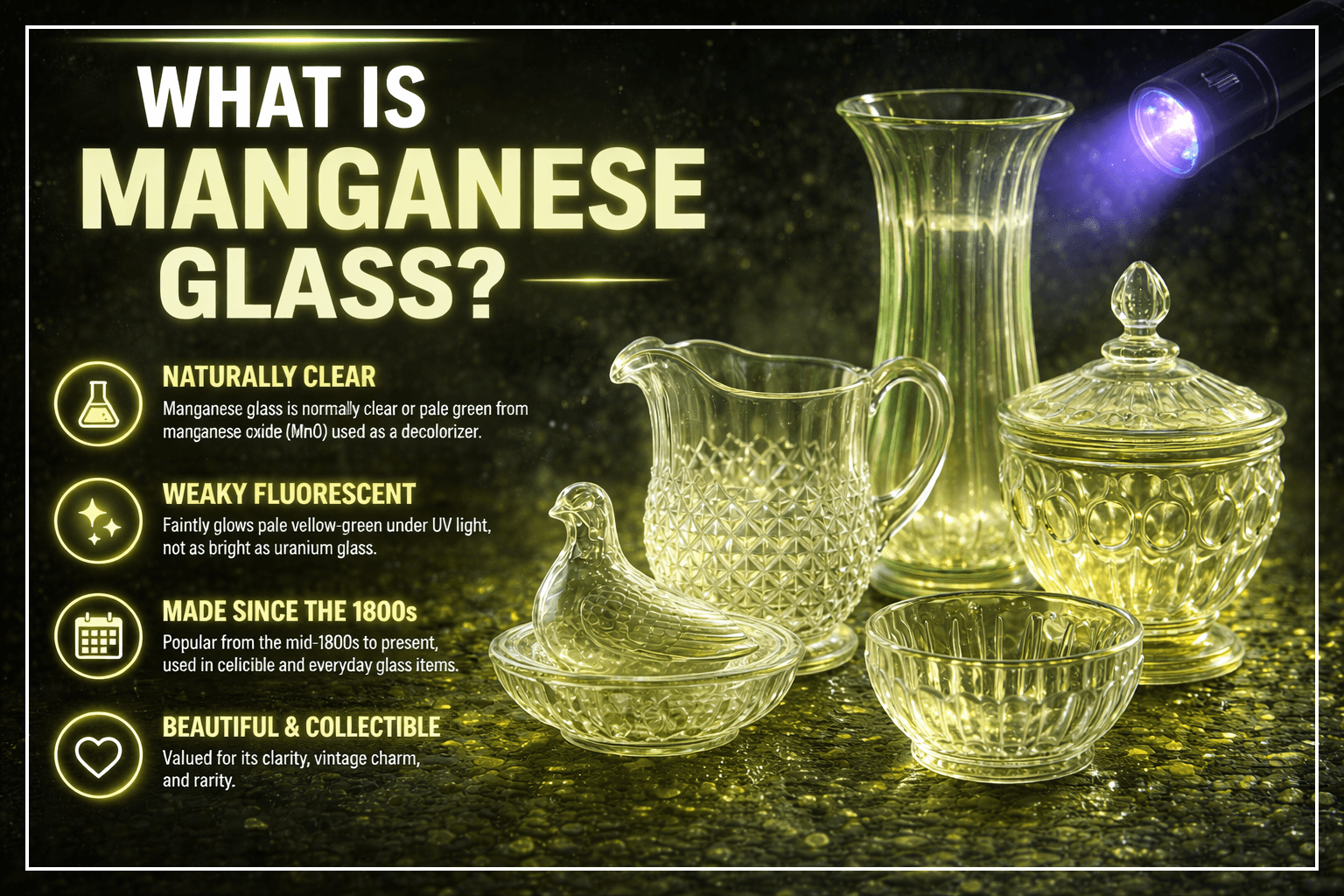
- Manganese Glass: Often glows a duller, "limey" green and usually requires a 365nm light to see it at all. If the glow is weak and yellowish, it’s likely manganese, not uranium.
4. Safety First: Protect Your Eyes
Never look directly into the lens of your UV flashlight. 395nm radiation is invisible but can cause eye strain or "welder's flash" over time. Always point the light away from yourself and others!
Master's Tip: Want to see the difference for yourself? Place a piece of "Manganese glass" next to "Uranium glass" under a 395nm light. The uranium will scream green, while the manganese will only whisper a faint lime. Knowledge is the collector's best tool.